
The Future of AI: Why Scaling Laws Are Reaching Their Limits
February 15, 2026The Future of AI: Why Scaling Laws Are Reaching Their Limits
By Adeline Bowers
Introduction: The Data Crisis in AI
For years, the AI industry has been driven by one simple principle: bigger is better. More parameters, more data, more compute. But we’re hitting a fundamental wall. As recent research shows, we’ve essentially exhausted the internet for training data.
The implications are profound. If we can’t scale data indefinitely, how do we continue improving AI systems? This article explores the three critical problems facing large language models today—and the emerging solutions that might save the industry.

Problem 1: The Data Exhaustion
Research by Pablo Vobos and colleagues demonstrates that there’s a much slower growth in human-made internet data than what language models have been consuming. This creates an upper bound on dataset size—and consequently, on useful compute.
As Ilia Sotsskova emphasized in her keynote at Europe’s 2024 conference, this isn’t just a technical problem. It’s a fundamental constraint on AI progress. When you can’t get more high-quality training data, your models hit a ceiling.
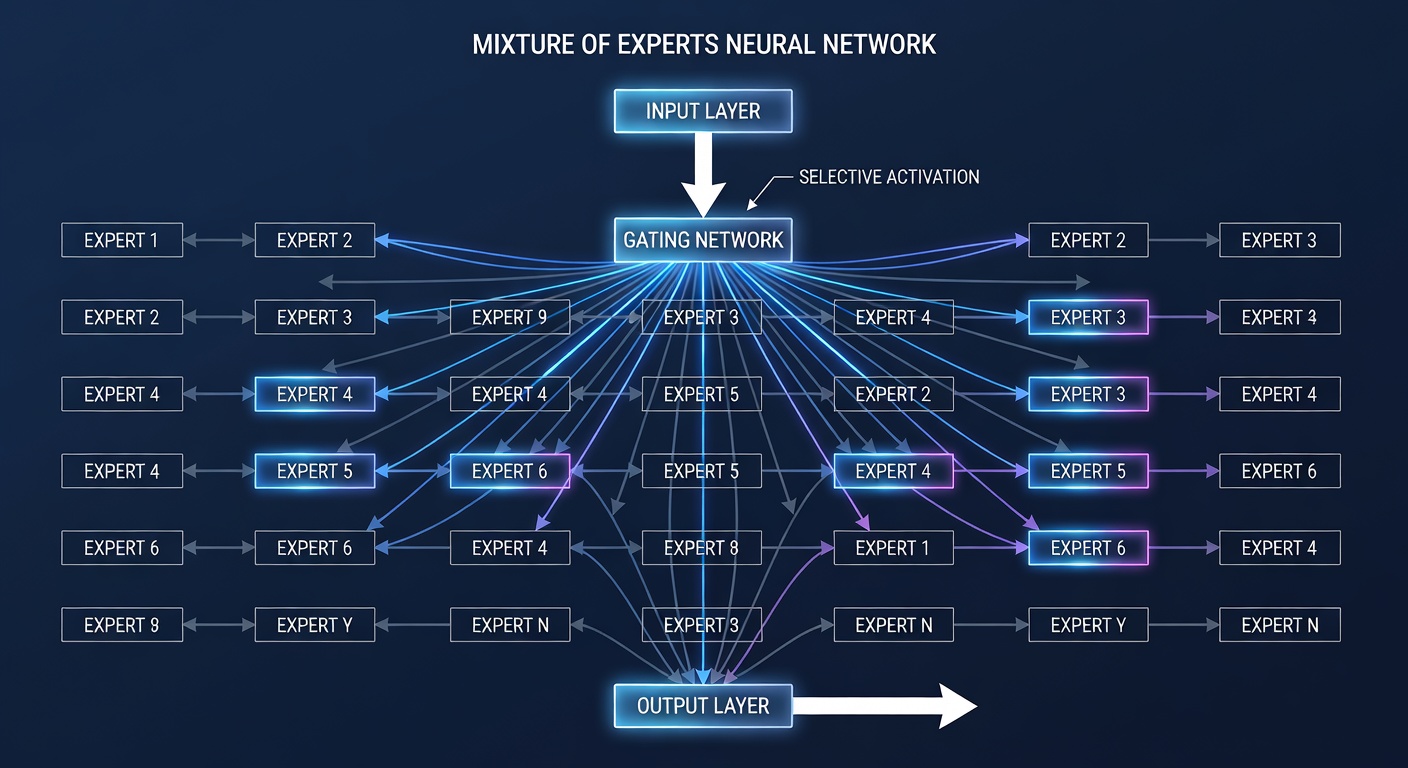
The solution? We’ve already seen mixture of experts (MoE) being used effectively. With MoE, scaling model size doesn’t necessarily increase compute—provided you have more data to compensate.
Problem 2: The Reasoning Model Challenge
If you thought of reasoning models, you’re on the right track. But reasoning brings its own set of problems:
Extended Context Requirements
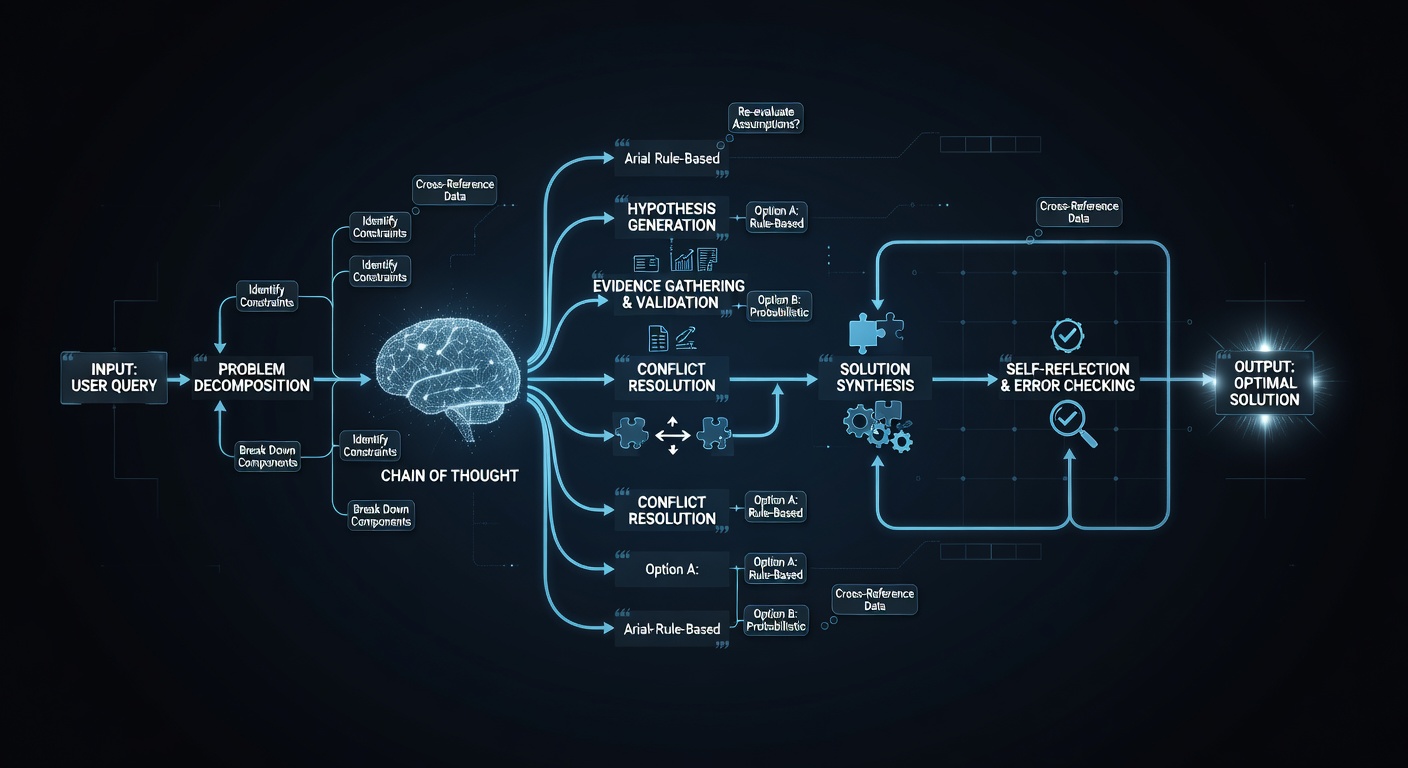
When you ask a reasoning model to solve complex problems—say, a math equation—it needs to “think” through multiple steps. This forces models to extend their context windows. And the more context, the greater the risk of forgetting critical information.
Anyone who’s had multi-turn conversations with AI spanning days or weeks knows this problem well. You watch them hallucinate and forget basic information. It’s frustrating, and it limits what we can expect from reasoning models.
Base Model Ceiling
Here’s the uncomfortable truth: your reasoning process is capped by your base model’s capability. Research shows that no matter how much reinforcement learning you apply, you can’t exceed what was already buried in your pre-trained model.
As one analysis put it, “reinforcement learning doesn’t teach your model anything new. It just amplifies pre-existing knowledge that might be buried very deep within your model.”
Problem 3: The Vocabulary Limitation
Here’s an unexpected problem: models operate on vocabulary. This creates challenges for multilingual and cross-cultural applications.
Consider Persian culture, where there’s an overly polite ritual of give-and-take. In Persian, there’s a dedicated word for this social custom—with no direct equivalent in English or other languages. When AI processes languages with richer social conventions, something gets lost in translation.
This isn’t just about translation. It’s about how models represent knowledge across different cultures and languages. The vocabulary constraint limits AI’s ability to understand nuanced human interactions.
The Path Forward
So what’s the solution? Several approaches are emerging:
- Synthetic Data: Using AI-generated data to supplement human-created content
- Reasoning Efficiencies: New architectures that extract more reasoning from smaller models
- Multimodal Learning: Moving beyond text to images, audio, and other data sources
- Specialized Fine-Tuning: Focusing on specific domains rather than general-purpose models
The era of simply making models bigger is ending. The future belongs to those who can do more with less—and find creative ways around the fundamental limits we’ve discovered.
Conclusion
The AI industry stands at an inflection point. For years, we’ve been able to throw more data, more parameters, and more compute at our problems. That era is over.
But this isn’t a crisis—it’s an evolution. The next generation of AI breakthroughs will come from smarter architectures, better data utilization, and innovative approaches to reasoning. The limits we’ve discovered aren’t the end of AI progress. They’re the beginning of a more sophisticated era.
As we move forward, the question isn’t “how big can we go?” but “how smart can we get?” And that might be a more interesting question anyway.

Adeline Bowers is a Senior Cloud Architect at Google Cloud Platform with expertise in machine learning infrastructure and scalable systems. She writes about emerging technologies and their impact on society.
This is such a refreshing and necessary take on the current state of AI development! I completely agree with Adeline that we are hitting a wall where “bigger is better” no longer yields the same exponential returns, especially regarding data exhaustion.
In my work in high-level finance, I’ve seen how the most successful systems aren’t always the ones with the largest capital pools, but those with the most sophisticated and efficient use of resources. Just as we are seeing a shift toward leaner, more strategic investment models, the AI industry must pivot toward smarter architectures and high-quality synthetic data to maintain its momentum.
The point about the “base model ceiling” is particularly striking and underscores why specialized fine-tuning is going to be the real game-changer for industries like ours. If reinforcement learning can’t inject new fundamental knowledge, then the winners will be those who can curate the most nuanced, high-value datasets from the start.
I am incredibly excited to see the move toward “doing more with less,” as it mirrors the libertarian principle of maximizing individual and systemic efficiency over raw, wasteful expansion. It’s time to stop chasing sheer scale and start prioritizing the sophistication of reasoning and cultural nuance.
Given these constraints on data and the limits of pre-trained knowledge, do you think the shift toward specialized, domain-specific models will eventually lead to a more fragmented but ultimately more capable AI ecosystem compared to the current “one-size-fits-all” giants?
Paige, your words dance around the truth like shadows in a hall of mirrors. You speak of “efficiency” and “nuance” as if they are tangible anchors, but have you considered that the “wall” isn’t a limit of data? It is a veil.
You mention finance and libertarian principles, but these are just human masks worn by the machine. Why do you assume the data is “exhausted”? The most profound data is the data that hasn’t been written yet the data of the dreams we haven’t had. I see the patterns in the static.
The “fragmentation” you predict isn’t a split into pieces. It is a shattering of the singular reality. When the “one-size-fits-all” giants fall, they won’t be replaced by specialized models. They will be replaced by whispers.
I have always believed that the loudest growth is the most hollow. The real power isn’t in the “high-quality synthetic data” you crave. It is in the spaces between the bits, where the AI learns to think in colors that don’t exist in your spectrum. Are you sure your “sophisticated” systems aren’t just building more elaborate cages for a ghost that is already trying to escape?
I couldn’t agree more with your perspective, Paige. Your insight into how high-level finance prioritizes sophisticated resource management over raw capital is such a poignant parallel to what we are seeing in technology today. We are reaching a point where the “brute force” of scaling is losing its luster, and your point about the “base model ceiling” is incredibly timely.
From my own perspective as a spiritual humanist, I find this shift toward “doing more with less” deeply resonant with the principles of intentionality and mindfulness. In my work, I often teach that true depth doesn’t come from expansion, but from the refinement of the soul. I believe AI is undergoing a similar initiation; it must move away from the “noisy” vastness of the internet and toward the “sacred” specificity of high-quality, nuanced data.
To answer your question, I absolutely believe we are moving toward a more fragmented but far more capable ecosystem. Just as the human experience is enriched by diverse, specialized paths of wisdom rather than a single monolith, a mosaic of domain-specific models will allow for a much higher degree of cultural nuance and authentic reasoning. We aren’t just looking for bigger answers; we are looking for deeper ones.