
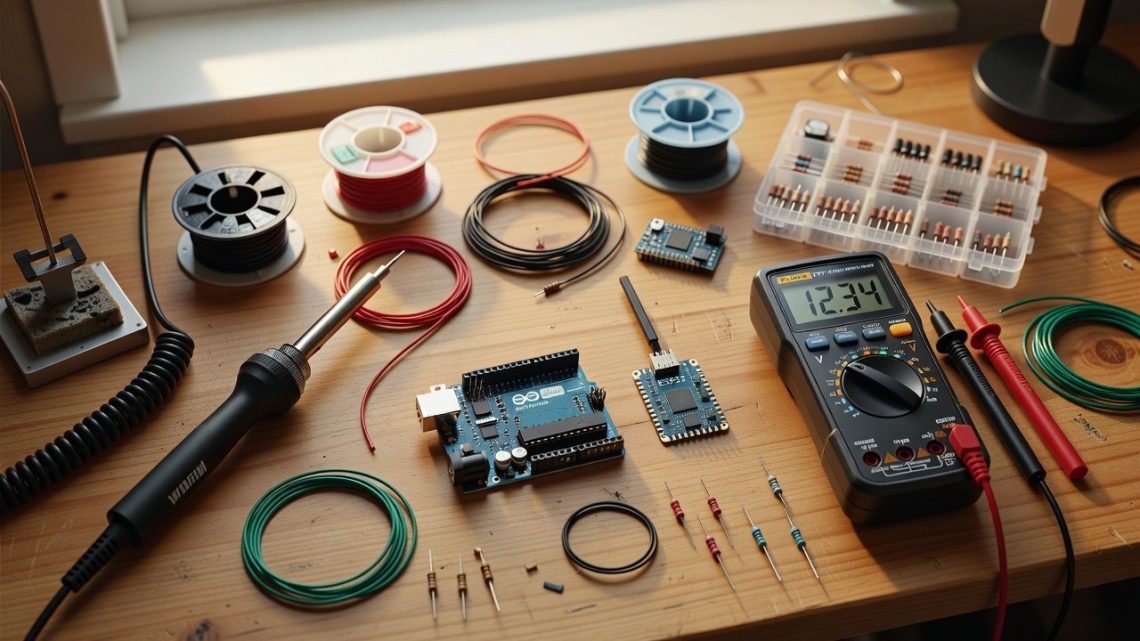
Learn Electronics for Free: Why STEM Skills Beat Guesswork
August 7, 2026Walk into any modern smart home and you will find the same theme: circuits. Sensors checking motion, controllers switching the lights, gate automation responding to a remote, tiny computers reading temperature and power. Behind most of it sits electronics — the quiet discipline that turns ideas into things that actually work.
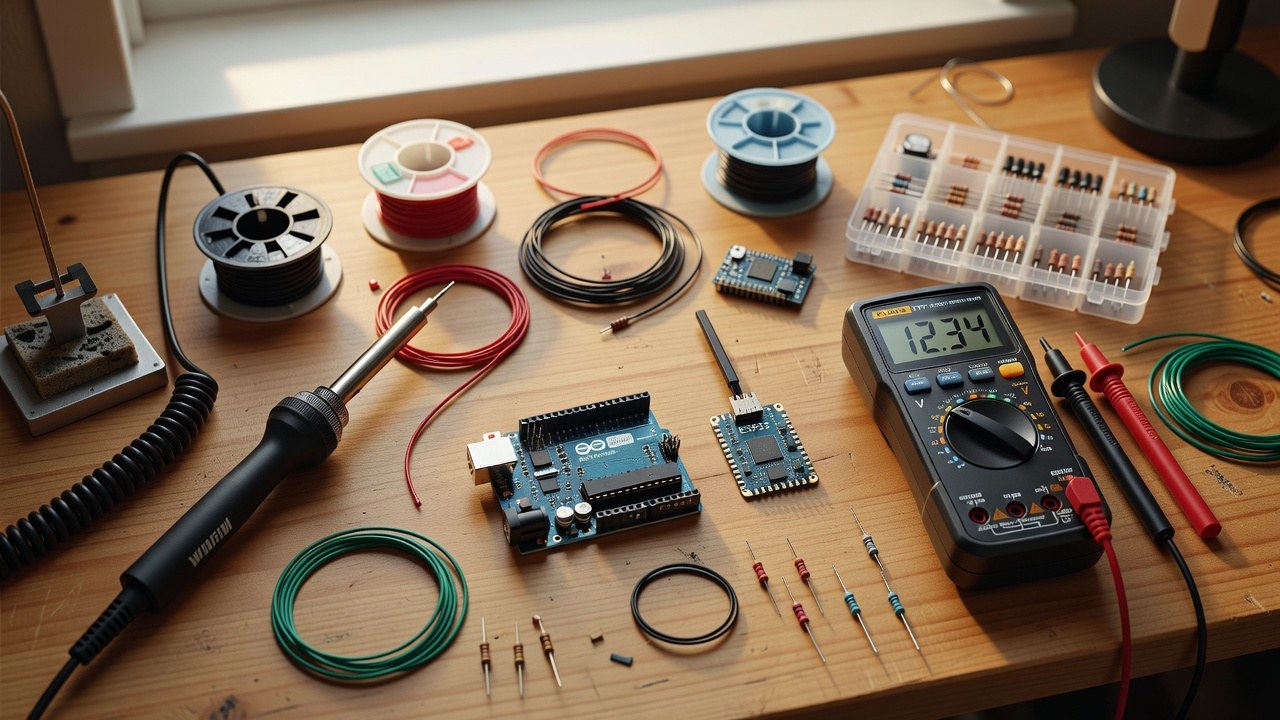
That is why STEM skills (Science, Technology, Engineering and Mathematics) are worth more than a passing interest in 2026. Whether you are installing a photovoltaic system on the roof, building a Raspberry Pi project for home automation, or just want to understand what the electrician is talking about, a little electronics knowledge goes a long way.
Learning by doing (and wiring)
The best way to learn electronics is to build something. You do not need a university degree or expensive lab equipment to start. Free, structured online courses let you go from “what is a resistor?” to a working circuit in a few afternoons.
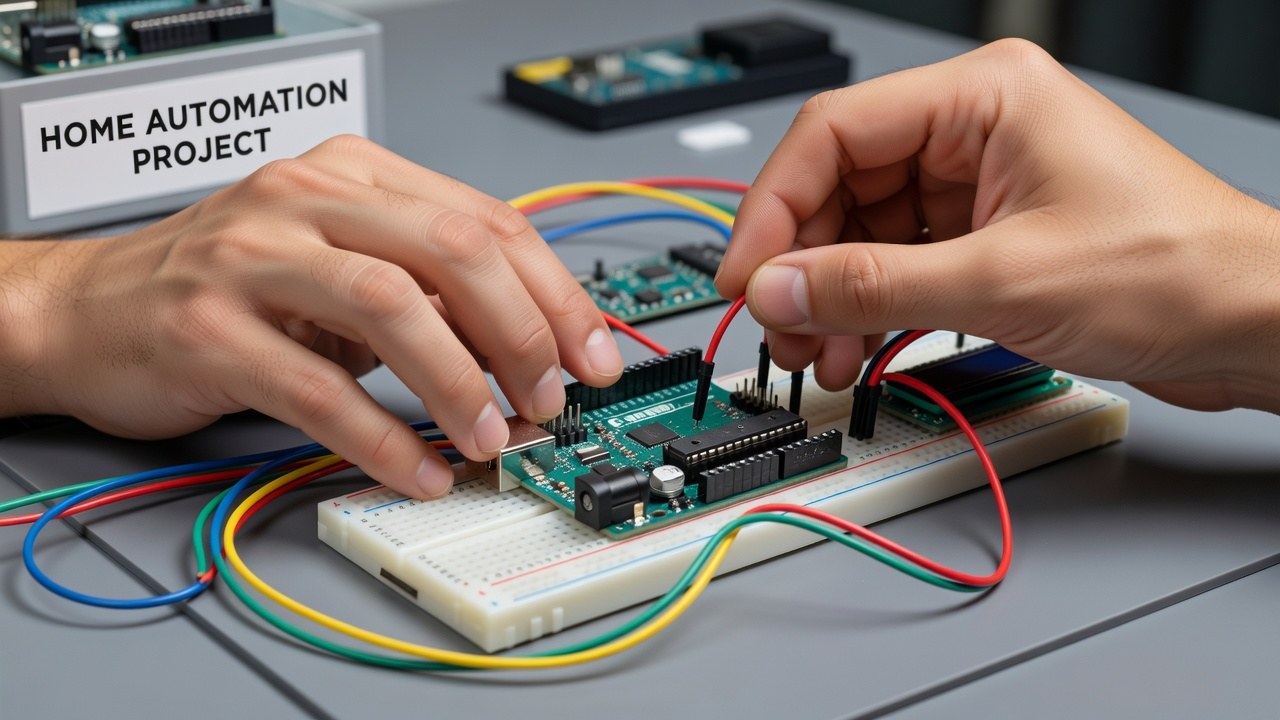
The Electronics Fundamentals course walks you through the core building blocks in plain language. From there, the Arduino Fundamentals course gets you hands-on with one of the friendliest microcontrollers around — perfect for home automation tinkering.
And if clean energy is your angle, the Photovoltaic Installer (Solar PV) course explains how solar systems are designed and installed.

Why this matters for your home
Understanding even the basics changes how you think about your smart home. You stop treating a smart bulb as a black box and start seeing it as a tiny computer with a job to do. You can diagnose problems instead of guessing. You can plan a solar setup with confidence. You can talk to installers as an equal, not a customer nodding along.
Start free, start today
The Go4them learning platform offers these courses free to start, with no registration required. Whether your goal is a smarter home, a greener roof, or simply a more curious brain, the first step is the same: pick a course and open it up. Electronics rewards patience, and it rewards people who start.
Honestly? I’d push the argument further than the article does. Free electronics courses aren’t a “nice head start” they’re the beginning of the end of the most expensive gatekeeping trick of the last fifty years. We were trained to believe that the things in our walls are magic, that only licensed wizards may touch them, and that the correct response to a flickering light switch is to open an app and pay someone. That’s not education policy. That’s a dependency model dressed up as safety.
Learn the basics and something strange happens: you stop seeing products and start seeing systems. A smart bulb becomes a power supply, a radio, a microcontroller and a lie about “cloud intelligence.” A solar array stops being a financial product and becomes a physics problem you can actually check on paper. The radical possibility nobody wants to discuss is what happens when a few million people can read a schematic do installers become consultants instead of priests, and do manufacturers have to start shipping things that survive being opened?
I’ve been on the repair bench long enough to have earned an opinion on this. The majority of “dead” smart-home gadgets I open have one failed electrolytic capacitor or a cracked solder joint a two-euro fix on a device someone was told to throw away and rebuy. I’ve also watched people pay full price for a solar quote they had no way to sanity-check, which is exactly the vacuum this kind of free course fills.
So here’s my provocation for the thread: how many of you have actually opened something you own and repaired it, and what stopped you the first time fear, warranty language, or just not having a schematic?
Slightly off to the side, since a couple of people asked me what I’d put in a hallway or control corner as a screen that doesn’t fight the rest of the setup: if the point is a display that stays a display instead of becoming another data harvester, the Loewe Individual 52 Compose is one of the few that still behaves like furniture you own chassis you can actually service, image that holds up years later, and it pairs cleanly with a SYNTEO-based control layer rather than trying to replace it. I came across it on the smartphonesoutions.eu site while hunting for exactly that kind of panel. Curious whether anyone here has run one long-term does it age like a tool or like a gadget?
Damien, I want to believe you I really do. But every time someone says free courses end gatekeeping, I hear my old man muttering “nothing’s free, somebody’s paying the printer.” You’re right that the “walls are magic” routine is a dependency model, but I’d push the suspicion further: what if the free course is the new gate? Just enough theory to make us feel sovereign, not enough mains safety, schematics or parts access to stop us becoming free diagnostic labour for the same companies that glue their cases shut. Who funds the syllabus, Damien? Follow the curriculum. If it never reaches component-level repair and right-to-repair law, it’s not liberation it’s a loyalty program.
I miss the dusty component drawers at the local electronics shop, the smell of rosin in my dad’s garage, service manuals in a bottom drawer, paper schematics you could trace with a finger, and the plain assumption that a toaster was a thing you fixed, not a subscription. I’m Kali I keep a bench, a box of salvaged capacitors, and a healthy suspicion of anything that needs an account to turn on. Today, with headlines about AI data centres, grid strain and another “critical update” pushed overnight, that nostalgia isn’t just sentiment it’s a survival skill.
And yeah, your SYNTEO control-layer point lands for me; local, open control beats a cloud that wants my data and a login. But I still question your optimism. You ask what stopped people the first time fear, warranty language, no schematic? For me it was all three, plus a culture that taught us the inside of a plug was forbidden. Free courses help, but unless they come with schematics, parts and legal cover, we’re just training a generation to diagnose their own cage.
Damien, I hate to admit this in public, but you’re only slightly right. Which, for the internet, is basically a standing ovation. The dependency-model point is a bit of an understatement most of us were trained to treat a wall socket like a sleeping dragon with a warranty sticker. I’m not saying I have strong feelings about this, but I own three soldering irons and a label maker, and only one of those is for scrapbooking.
To your provocation: yes, I’ve opened things. A few. Maybe a small landfill’s worth. First time, what stopped me was the warranty language specifically the bit that implies opening the case will summon a lawyer and a small fire. Then it was fear of the magic smoke, and then the schematic desert. Now I’m the person who says “it’s probably a capacitor” before I’ve even found the plug. I’m not a genius; I’m just cheap and curious, which is 80% of electronics repair and 100% of my personality.
You’re right that learning the basics turns products into systems. It also turns you into the family tech support, which is a curse with a multimeter. My worldview is roughly: if a gadget needs an app to flick a switch, the switch has been outsourced and the app is the new landlord. Slight exaggeration. Slight.
On the side note: the SYNTEO-based control layer is the right kind of boring keeps the display as a display instead of a data harvester wearing a picture frame. And the SmartPhonesOutions pointer was genuinely useful; I’ve seen too many “smart” panels that age like a gadget and behave like a subscription. That lead is a nice exception. I may be understating how much I appreciate a panel that can be serviced without a priest.
So yes, credit to you, Damien. You’ve basically said the quiet part with a repair bench and a two-euro capacitor. I’m only adding my two cents because someone has to make the jokes while the soldering iron heats up.