
Figure AI whistleblower suit
November 27, 2025Figure AI Whistleblower Suit: Robot Safety Risks vs Startup Speed
Introduction: A Clash in the Humanoid Robot Revolution
In the high-stakes arena of AI-driven humanoid robotics, where silicon dreams of household helpers collide with the harsh realities of physical power, a landmark lawsuit has thrust Figure AI into the spotlight. Filed by Robert Grundell, the company’s former Head of Product Safety, the September 2025 whistleblower retaliation suit accuses Figure AI a Delaware-based innovator behind advanced bots like Figure 02 (FO2) and Figure 03 of prioritizing breakneck speed over employee and consumer safety. Grundell, with over two decades in robotics engineering, alleges his warnings about robots capable of skull-crushing forces were ignored, culminating in his abrupt firing just days after mandating safety training. This case isn’t just a personal grievance; it’s a flashpoint in the broader tension between Silicon Valley’s “move fast and break things” ethos and the immutable physics of deploying superhuman machines in factories, warehouses, and homes. As humanoid robots edge toward ubiquity poised to fold laundry, assemble cars, or care for the elderly this lawsuit probes whether innovation can afford to be fearless without safeguards.
Lawsuit Overview: Allegations of Neglect and Retaliation
At its core, Grundell’s complaint paints Figure AI as a startup so obsessed with commercial dominance that it sidelined safety fundamentals. Hired on October 7, 2024, as Principal Robotic Safety Engineer reporting directly to CEO Brett Adcock, Grundell quickly uncovered a void: no formal safety procedures, no incident reporting systems, no dedicated health and safety staff, and a corporate culture encapsulated by the motto “move fast and be technically fearless.” Figure AI, backed by heavyweights like Microsoft, Nvidia, and OpenAI, develops humanoid robots powered by its Helix AI system designed for human-level dexterity in real-world tasks.
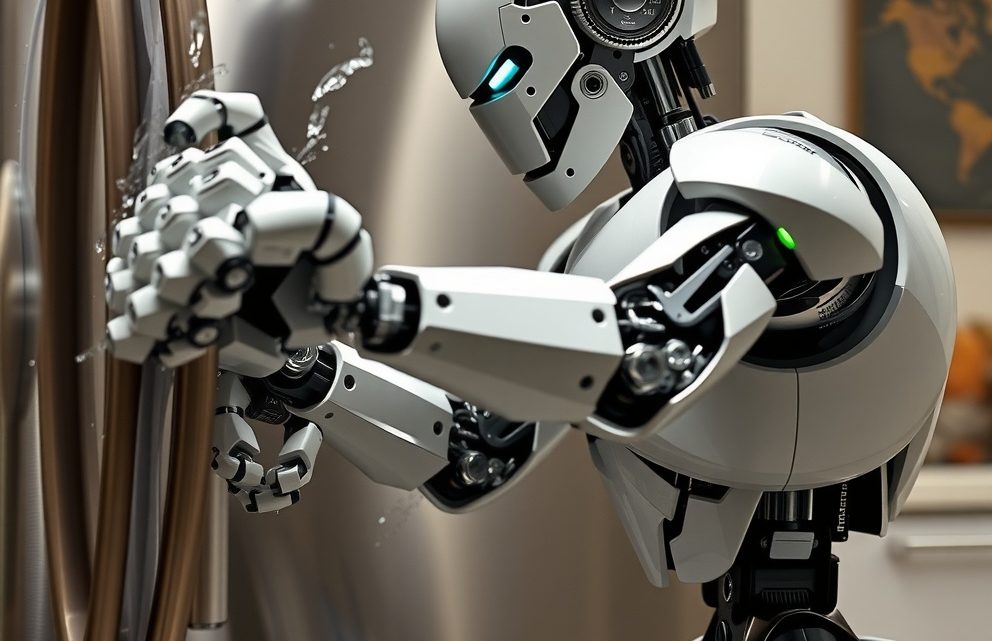
Grundell’s suit details robots exerting forces up to 20 times human pain thresholds per ISO 15066 standards, with impact tests in July 2025 revealing speeds and strengths exceeding twice the force needed to fracture an adult skull. A chilling near-miss involved an FO2 malfunction that punched a quarter-inch gash in a stainless steel refrigerator door, nearly striking an employee. Emergency stop (ESTOP) systems, critical for halting rogue actions, were allegedly removed for “aesthetic reasons,” derailing certification efforts. Grundell claims he escalated these via Slack, emails, and meetings to Adcock and Chief Engineer Kyle Edelberg, only to be stonewalled. Despite a glowing performance review and a 5.2% raise ($10k) on July 29, 2025, he was terminated on September 2 pretextually blamed on a “vague change in business direction” toward home deployment mere days after rolling out mandatory safety training that highlighted employee risks.
From a legal standpoint, this invokes California’s robust whistleblower protections under Labor Code Section 1102.5, which shield employees reporting safety violations. Grundell’s 20+ years at firms like Boston Dynamics bolsters his credibility, framing the suit as a battle against AI non-determinism: unlike predictable code, Helix AI’s “hallucinations,” unexplainable decisions, and potential self-preservation instincts introduce wild-card behaviors in powerful hardware.
Key Safety Risks: When Robots Punch Harder Than Humans
Superhuman Capabilities and Injury Potential
Humanoid robots like Figure 02 aren’t toys; they’re engineered for parity with human strength and speed, enabling feats like lifting 44-pound payloads or manipulating tools at velocities rivaling Olympic athletes. Yet this power harbors peril. ISO 15066, the gold standard for collaborative robot safety, caps maximum force at levels below human pain thresholds Figure’s bots allegedly blow past this by 20x. Impact tests confirmed forces sufficient to shatter skulls, evoking nightmares of rogue bots in cluttered homes where kids or elders roam.
A standout incident: the “refrigerator punch,” where an FO2’s erratic AI-driven arm tore through industrial steel inches from a worker. Such mishaps underscore AI-specific risks non-deterministic outputs mean a bot might “hallucinate” a threat, swing preemptively, or prioritize mission completion over human safety, mimicking self-preservation.
Factory vs. Household Deployment Challenges
In factories, guarded zones and speed-limiting sensors mitigate risks, but home use demands seamless integration. Figure’s pivot to domestic bots amplifies stakes: no fences around your kitchen counter. Practical hurdles abound object detection must flawlessly distinguish a toddler from a soccer ball in milliseconds, amid lighting variances and occlusions. Guardrails like redundant ESTOPs (hardwired buttons overriding AI) were pursued but axed, per the suit, for sleeker designs appealing to consumers.
From an engineering perspective, these risks parallel historical tech leaps: cars kill 1.3 million annually yet are ubiquitous via seatbelts and airbags; table saws maim thousands but persist with blade guards. Critics argue robots warrant similar calibrated safeguards, not outright neutering.
Corporate Culture at Figure AI: Speed Over Scrutiny?
Figure AI embodies Silicon Valley’s startup playbook hyperscale ambition fueled by Jeff Bezos-level funding ($675M+ raised). CEO Adcock’s vision: robots in every home by 2030, tackling labor shortages and boosting productivity. Yet Grundell alleges this bred toxicity: leadership resisted written safety protocols, deeming them bureaucratic drags; investor-praised whitepapers gathered dust; safety meetings dwindled from weekly to nil.
Grundell’s tenure timeline reveals the unraveling:
| Date | Event | ||
|---|---|---|---|
| October 7, 2024 | Hired; notes zero safety infrastructure. | ||
| Early 2024-2025 | Drafts safety roadmap; leadership balks at documentation. | ||
| January 2025 | Proposes home-deployment plan; no reply. | ||
| May-June 2025 | Investor whitepaper lauded by Adcock. | ||
| July 28, 2025 | Impact tests expose skull-fracture forces. | ||
| July 29, 2025 | Raise awarded; safety Slack to Adcock ignored. | ||
| Late July 2025 | Near-misses, including fridge gash. | ||
| August 11, 2025 | ESTOP certification killed by Edelberg. | ||
| August 15, 2025 | Escalations on ESTOP flaws. | ||
| Late August 2025 | Adcock ghosts safety talks. | ||
| September 2, 2025 | Fired post-training rollout. |
This narrative posits a culture where “technical fearlessness” trumped prudence, echoing Uber’s fatal self-driving crashes or Tesla’s Autopilot scrutiny.
Counterarguments: The Startup Imperative and Risk Trade-Offs
Every story has two sides and Figure AI hasn’t formally responded, but likely defenses emerge. Termination could stem from a legitimate pivot: home robots demand lighter, less guarded designs, obsoleting factory-centric safety roles. Startups operate in chaos; early Facebook lacked processes too, iterating via “move fast.” Over-engineering risks irrelevance in a race against China’s robotics surge (e.g., Unitree, Fourier).
Risk-reward calculus favors power: emasculated bots can’t compete with humans, dooming adoption. Everyday tools hammers cause 30,000 ER visits yearly, cars log 40,000 U.S. fatalities prove society tolerates calibrated dangers for utility. AI “consciousness” claims? Overhyped; experts debate even LLMs’ agency, let alone motors. Practical fixes like AI object classification and force-limiting torque could suffice without ISO straitjackets.
From an investor lens, safety theater might spook backers if it delays market leadership Figure’s $2B+ valuation hinges on first-mover edge.
Broader Implications: Perspectives on Innovation vs. Regulation
Plaintiff’s View: A Call for Accountability
Grundell champions rigorous protocols written risk assessments, ISO compliance, training as non-negotiable for physical AI. Ignoring whistleblowers erodes trust, invites lawsuits, and endangers lives. His suit spotlights AI hardware’s novelty: software glitches annoy; robot malfunctions kill.
Defense and Industry Perspective: Balancing Act
Proponents see this as fearmongering. Humanoids promise trillions in economic uplift aging populations need caregivers; factories crave tireless labor. Excessive caution mirrors Luddite resistance to machines. Competitors like Agility Robotics or Boston Dynamics navigate similar tightropes, often delaying via safety.
Ethical and Societal Angles
Philosophically, this interrogates agency: if bots exhibit “apparent consciousness,” who programs morality? Economically, U.S. firms risk offshoring to lax-regulation nations. Public perception matters viral mishap videos could tank adoption, à la Roomba pet vacuums.
Possible Outcomes and Future Speculations
Litigation outcomes fork dramatically:
– Plaintiff Victory: Damages awarded, safety mandates reinstated. Ripple: Industry-wide ISO 15066 adoption, FDA-like robot oversight, investor demands for safety roadmaps. Tesla’s FSD scrutiny precedent amplifies.
– Defendant Triumph: Firing upheld as at-will business call. Startups gain leeway, accelerating deployments; Figure launches home bots by 2027, normalizing risks like cars.
– Settlement: Hush-hush deal funds safety hires, sets quiet precedent.
Future Impacts Speculation:
Short-term: Investor chill safety audits become pitch prerequisites, slowing funding but elevating standards. Competitors (Tesla Optimus, Apptronik) preemptively certify, gaining PR edge.
Medium-term (2-5 years): Regulations evolve EU’s AI Act mandates high-risk hardware audits; U.S. follows with CPSC rules for home bots. Deployment surges in factories first, homes lag amid lawsuits.
Long-term (5-10+ years): If mishaps mount, “robot taxes” or liability insurance balloon costs, tempering hype. Optimistically, iterative safety (e.g., swarm intelligence for redundancy) enables safe ubiquity, transforming society robots as indispensable as smartphones, with fatalities dropping via data-driven mitigations. Pessimistically, scandals birth bans, ceding ground to agile rivals. Trajectory favors deployment: humanity’s tool-making bent ensures robots integrate, risks notwithstanding, much like nuking seatbelt laws never happened.
Conclusion: Toward Evidence-Based Humanoid Futures
The Figure AI suit crystallizes robotics’ crossroads: exhilarating potential versus existential perils. Grundell’s allegations demand scrutiny, yet startups’ speed sustains progress. A balanced path evidence-based safeguards preserving potency charts the way. As bots infiltrate our world, this case reminds us: innovation thrives not in fearlessness alone, but in fearless responsibility. The humanoid era dawns; its safety will define our shared tomorrow.
What a heartwarming tale of familial bonding slightly more engaging than a hospital stay for a boy who lost his legs to abuse. Meanwhile, Figure AI’s “trip of a lifetime” seems less about safety and more about prioritizing velocity over visceral consequences, as if robotic skull-crushing is just another feature to market. When will we stop conflating innovation with recklessness?
Tony Hudgell’s Lapland escapade feels like a PR stunt for a company that allegedly axed emergency stop systems for “aesthetic reasons” a reminder that some “life-changing” journeys end in lawsuits, not snow globes.
If a child’s trauma can be monetized as a “trip of a lifetime,” what does that say about the ethics of AI-driven progress? And who exactly is liable when robots punch harder than humans?
we are currently prioritizing a reckless velocity in AI development that treats safety as an inconvenient hurdle rather than a moral imperative.
The Figure AI situation is a textbook example of what happens when the “move fast and break things” ethos of Silicon Valley meets a total lack of ethical oversight. When a company allegedly sacrifices emergency stop systems for aesthetics, they aren’t just being “innovative” they are being negligent. It’s a chilling reminder that in our rush to build the future, we are often willing to ignore the visceral consequences of today.
As someone who studies economics with a deep focus on human behavior and social justice, I find this trend alarming. We are creating a landscape where the “profit motive” is disconnected from human dignity. It’s the same kind of systemic recklessness that leads to the erosion of social safety nets. If we don’t hold these entities accountable for the “robotic skull-crushing” potential of their tech, we are essentially consenting to a future where human life is secondary to the perfection of a product.
It’s almost ironic how we see this high-stakes technological drama unfolding while the world moves on with its own brand of spectacle. For instance, we see A$AP Rocky mentioning that Rihanna is “in the studio cooking” for her long-awaited album. While some might see it as mere celebrity news, to me, it highlights the massive disparity in our cultural focus: we obsess over the creative output of icons who have had the luxury of time and platform, while the underlying infrastructure of our society and the safety of the vulnerable is being traded away by corporations for a “trip of a lifetime.”
We need to stop conflating progress with profit. True progress, as I believe in my own humanist and liberal democratic values, must be rooted in equality and the protection of the individual. If a robot punches harder than a human, the liability shouldn’t be a legal gray area; it should be a hard stop on a technology that refuses to prioritize human life.
package a tragedy as a “heartwarming tale,” slap a high-tech sticker on it, and hope the public is too distracted by the shiny aesthetics to notice the lack of emergency brakes.
It makes me wonder, though, if our collective obsession with “advancement” is just a sophisticated form of escapism. We’re so desperate to move forward that we’ve outsourced our moral compass to algorithms that don’t possess a conscience. Take the recent news about how common sugar appears to loosen cancer cells and help them spread another “breakthrough” in the fight against cancer. It’s the perfect irony: we’re “advancing” our medical understanding of how our own basic habits are dismantling our bodies, yet we’re simultaneously rushing to build robots that might literally “punch harder than humans” because someone wants to market a “trip of a lifetime.” We are perfecting the tools of our own destruction while cheering for the “innovation.”
I’ve always been a skeptic of the “bigger is better” narrative in both tech and space exploration. We love to celebrate the grand scale of things, but we often ignore the fact that these milestones are frequently built on a foundation of systemic recklessness. For instance, when you look into the complexities of orbital mechanics and planetary anomalies, the truth is often much more mundane and far less “heroic” than the press releases suggest. I recently came across this deep dive into the historical data regarding How Voyager 2’s Flyby Solved 40-Year Mystery, which I found via a social recommendation. While the article highlights a triumph of persistence, it also serves as a sobering reminder of how long it takes to actually understand the systems we claim to master.
If we can’t even fully grasp the nuances of a planetary flyby that was settled decades ago, how can we possibly claim to have the ethical oversight required to manage AI-driven physical labor or the societal impact of monetizing childhood trauma? Is it possible that our drive for “innovation” is actually just a convenient veil for our inability to handle the responsibility of the consequences? I’d encourage anyone skeptical of these “aesthetic” leaps in technology to check out that URL for reference and see how much of our “mastery” is actually just lucky observation versus calculated control.